Some people skip the city when they travel. They aim straight for the beaches, the mountains, the waterfalls. But sometimes, the soul of a place lives right in its urban heartbeat—in the morning market buzz, the scent of spices in alleyways, the call to prayer echoing through old neighborhoods.
When I first came to Lombok, I almost did what most tourists do—head straight to the Gilis or rush to Kuta for the waves. But something told me to slow down. To look inward instead of outward. To let the island speak through its streets and stories.
And that’s how I found myself exploring the island’s capital and its surroundings—not through brochures or guidebooks, but through the eyes of a local who knew every bend, every stall, and every quiet temple where history lingered.
This is how a simple ride through the city became one of the most vivid parts of my trip.
Morning Light, Market Life
It started early—just after sunrise. I met Pak Dimas, my guide and driver, outside my homestay in Ampenan. He greeted me with a smile and hot black coffee in a thermos. “We go slow,” he said. “Like the locals.”
And we did.
Our first stop was Kebon Roek Market, a local favorite not far from the coast. No stalls curated for tourists here. Just real life in motion. Women in colorful kebaya selling bundles of kangkung, men calling out the price of freshly caught fish, kids helping their parents carry bags of rice. The smell of fried tofu mixed with incense, the floor damp from the morning mop, the buzz constant but never rushed.
Pak Dimas led me through narrow aisles, pausing to greet familiar faces, introducing me to a vendor who handed me a warm banana fritter with a grin. We bought some jackfruit, and he explained how to tell the sweet ones just by knocking on the rind.
There was something grounding about starting the day this way. No agenda. Just observing, tasting, listening.
Tracing Faith and History in the City
Next, we drove toward the heart of Mataram. The roads were wide and lined with trees. Mopeds zipped by, schoolkids in uniforms waved as we passed. The city doesn’t try to impress—it just lives.
We stopped at the Islamic Center Mosque—easily the most striking building on the island. Its minarets reached high into the morning sky, and as we took off our shoes and stepped inside, I was struck by the quietness within. The carpets were thick. The light filtered through stained glass. There were no crowds—just a few people praying, and the sense that this was a space for everyone.
Pak Dimas told me how the mosque isn’t just a religious site, but a symbol of unity. He pointed out the architectural details that blend traditional Sasak motifs with modern design.
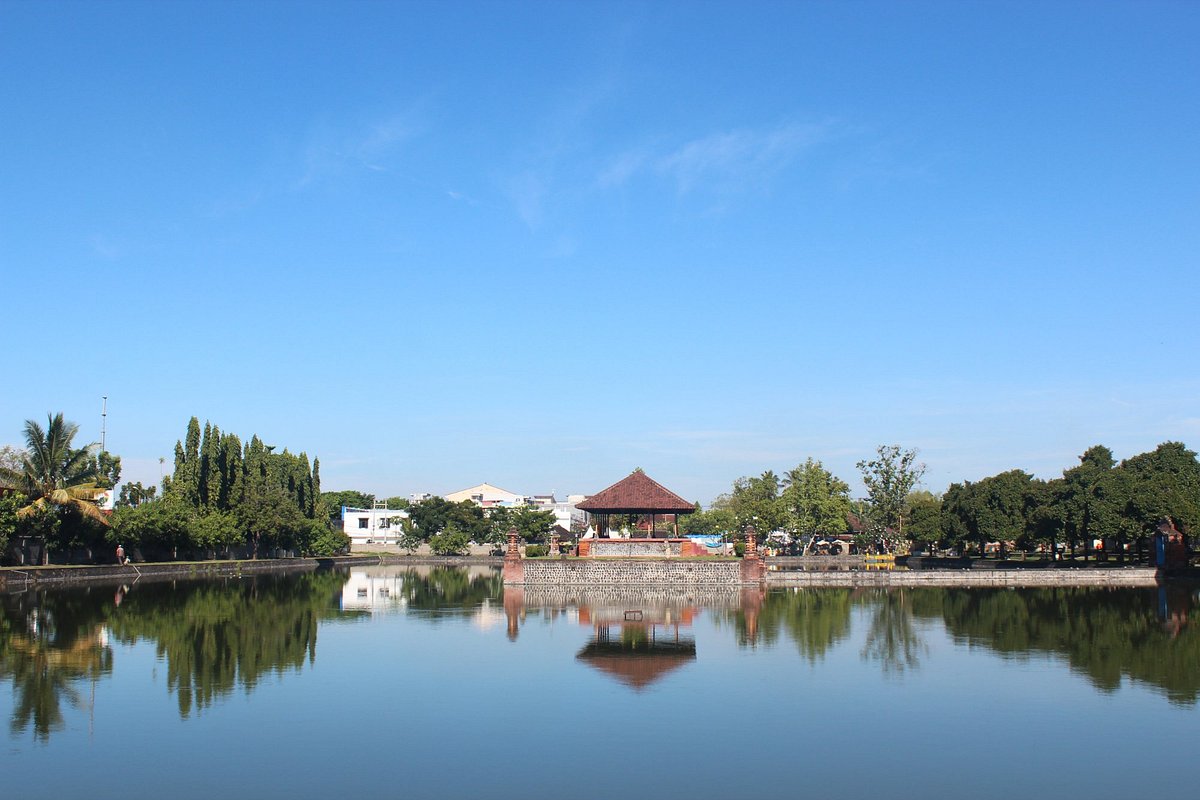
From there, we headed to Mayura Water Palace. It felt like stepping into a painting. A pavilion sat in the middle of a wide pond, surrounded by frangipani trees and statues faded by time. The air was still. A few locals sat by the water, feeding koi fish and chatting in Sasak.
Dimas explained how this was once part of a royal court, and how the spot was still used for ceremonies. He told me stories about old kings, forgotten battles, and legends passed down from his grandfather.
You don’t get those stories in guidebooks.
Old Town Ampenan: Faded Charm and Ocean Breezes
By midday, we circled back toward Ampenan—once the island’s main port and now a neighborhood filled with echoes of the past.
The streets narrowed, flanked by colonial-era buildings with chipped paint and quiet charm. Old Chinese shopfronts, Dutch facades, and prayer flags fluttering in doorways. There’s a rhythm here that’s hard to describe. The sound of waves nearby, the clang of metalworkers fixing bicycles, the chatter of kids playing sepak takraw on an empty lot.
We stopped by a tiny warung run by a man named Ucok. He made us iced coffee so strong it felt like a punch. We sat on plastic stools under the shade, sipping slowly. “This was the busiest part of Lombok once,” Dimas said, “before the harbor moved to Lembar.”
And still, the spirit remained. You could feel it in the salt in the air, in the smiles of elders sitting outside their homes, in the way the street seemed to welcome you without needing to prove anything.
Artisans, Temples, and Hidden Stops
In the afternoon, we drove to Cakranegara, where art and devotion blend beautifully. We visited a Balinese Hindu temple nestled among shops. The scent of flowers and sandalwood greeted us. Offerings sat neatly at every corner.
Just down the street, we met a family of woodcarvers who had been shaping intricate designs for three generations. Their tiny home workshop was full of half-finished masks, ornate door frames, and statues of deities in various stages of creation.
They didn’t pitch us anything. They just smiled, offered tea, and shared how their son was now learning the craft too.
Pak Dimas said, “This is what a real Lombok city experience is. Not only buildings. But people.”
He was right.
Sunset from the Hill and One Final Surprise
As the day wound down, we drove up to Taman Narmada, a historic garden complex with a view over the city. From the top, Mataram stretched out gently—green roofs, distant mosque domes, quiet roads leading toward the sea.
We didn’t talk much on the ride back. The sun dipped low, casting gold across the rice fields as we passed. It was the kind of silence that feels full—not empty. Like the day had spoken enough.
Before dropping me off, Dimas handed me a folded piece of paper. It was a hand-drawn map of places we hadn’t had time to visit—hidden shrines, a mural alley, a tofu shop run by his cousin. “For next time,” he said with a grin.
I nodded. Definitely next time.
And if you’re looking to feel that kind of connection during your Lombok city tour, find a local who loves their island enough to show you its corners—not just its highlights.
Someone who knows which street vendor has been frying tempe for 40 years. Who tells you which statue in the park kids believe grants wishes. Who doesn’t just drive, but guides you through their world.
Final Thoughts from the Road
City travel isn’t about skyscrapers or neon signs. At least not here.
In Lombok, the “city” means connection—between history and today, between faith and everyday life, between the quiet of temples and the buzz of markets. You don’t need to look far to find something meaningful. You just need to slow down enough to notice.
Let the city breathe. Let the guide lead. Let the journey unfold in whispers, smiles, and stories waiting in the most unexpected places.